
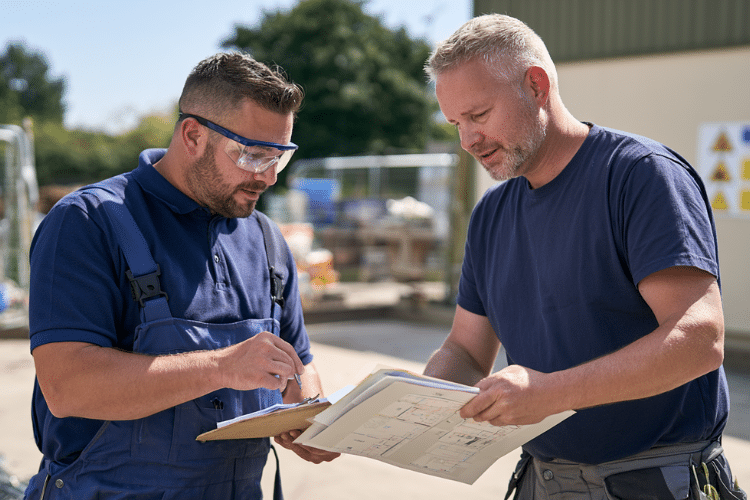
If your business works in construction, maintenance, refurbishment, facilities management or trades, you may come across the terms licensable and non-licensed asbestos work.
The difference matters. Some asbestos work needs an HSE-licensed contractor. Other lower-risk work may fall under non-licensed asbestos work.
However, “non-licensed” does not mean “no risk”. It also does not mean “no controls” or “no training”.
This guide explains the difference between licensable and non-licensed asbestos work. It also gives examples of each type and explains what training your team may need before work starts.
What is the main difference between licensable and non-licensed asbestos work?
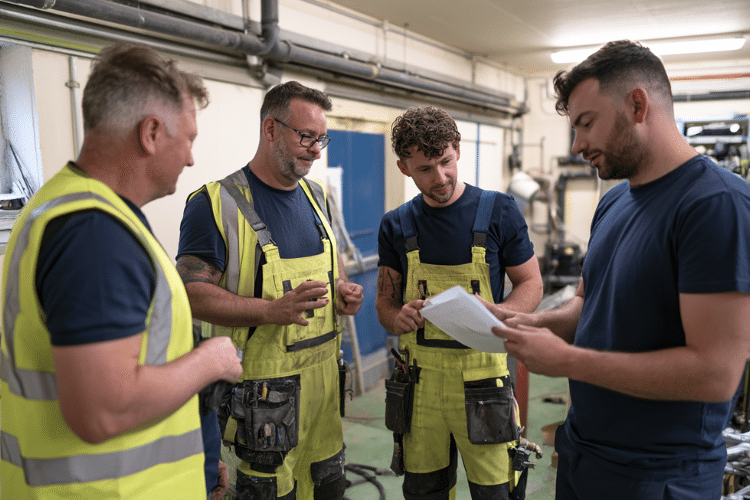
The main difference is the level of risk.
Licensable asbestos work usually involves higher-risk materials or tasks. In most cases, a contractor with an HSE asbestos licence must carry out this work.
Non-licensed asbestos work involves lower-risk tasks with certain asbestos-containing materials. These tasks may not need an HSE licence. However, employers still need to assess the work, control the risks and make sure workers have suitable training.
Quick comparison: licensable vs non-licensed asbestos work
| Type of asbestos work | What it usually means | Is an HSE licence needed? | Important note |
| Licensable asbestos work | Higher-risk work, often involving materials or tasks more likely to release asbestos fibres | Usually yes | Higher-risk work must be carried out by a licensed contractor. |
| Non-licensed asbestos work | Lower-risk asbestos work where exposure can be controlled | No | Still requires risk assessment, controls and suitable training. |
What is licensable asbestos work?
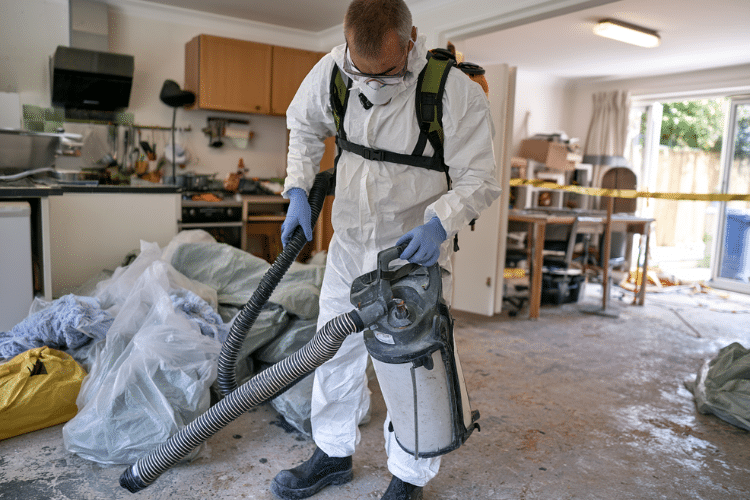
Licensable asbestos work usually involves higher-risk asbestos-containing materials or tasks. These materials may release fibres more easily. The work may also take longer, involve greater disturbance or need more complex controls.
HSE gives examples of licensable work, including work on sprayed coatings, pipe lagging, loose fill insulation, asbestos millboard, significant quantities of loose or fine asbestos debris, and some work on asbestos insulating board.
In most cases, a contractor with an HSE asbestos licence must carry out this type of work. Licensed contractors must also notify the appropriate authority before licensable work starts.
What is non-licensed asbestos work?
Non-licensed asbestos work involves lower-risk tasks with certain asbestos-containing materials. These tasks may not need an HSE asbestos licence.
However, employers still need to assess the work properly. They also need to control the risks, use suitable working methods and make sure workers have the right training.
Examples may include some controlled work with asbestos cement products, asbestos-containing floor tiles, textured decorative coatings and short-duration tasks where the material remains in good condition.
For example, drilling, removing floor tiles or working near roof sheets may look straightforward. Even so, employers still need to check the material, its condition, the method of work and the risk of fibre release.
For more detail on this category, see our guide What is Non-Licensed Asbestos Work?

Where does Asbestos Awareness fit in?
Workers need Asbestos Awareness training if they may come across asbestos during normal work but do not plan to intentionally disturb, repair or remove asbestos-containing materials.
HSE states that asbestos awareness is intended to help workers and supervisors avoid work that may disturb asbestos. It is not enough for workers who plan to carry out work with asbestos-containing materials.
Ouch’s Asbestos Awareness CAT A course is designed for employees whose work could expose them to asbestos. For example, it may be suitable for roles such as construction workers, demolition workers, roofers, heating engineers, plasterers, carpenters, plumbers, painters and decorators. The course covers asbestos history and properties, health effects, types and likely occurrences of ACMs, avoiding exposure risk and legislation.
For a more detailed explanation, read our guide on What Is Cat A Asbestos Awareness?
Where does Non-Licensed Asbestos Work CAT B fit in?
Non-Licensed Asbestos Work CAT B is for workers whose role may require them to disturb asbestos-containing materials as part of non-licensed work.
HSE gives examples of workers who may need this level of information, instruction and training, including those drilling holes in asbestos materials, laying cables in areas containing undamaged asbestos materials, removing asbestos-containing floor tiles, and cleaning or repairing asbestos cement sheet roofing or cladding.
Ouch’s Non-Licensed Asbestos Work CAT B course gives delegates the theoretical and practical skills to undertake non-licensed works with asbestos-containing materials. The course includes legislation, asbestos zones, use of Class H vacuum, wetting asbestos materials, PPE, damp rags for minor asbestos contamination, personal decontamination, asbestos waste disposal, risk assessment, plan of work and emergency procedures.
The course is certificated by IATP or UKATA, runs for one day, includes a multiple-choice exam, and requires a valid Asbestos Awareness certificate as a prerequisite.
How can employers decide what training is needed?
Employers should not choose asbestos training based only on job title. They should consider the actual work being carried out.
Useful questions include:
- Could the worker encounter asbestos-containing materials during normal work?
- Will they need to intentionally disturb asbestos-containing materials?
- Has a suitable risk assessment been completed?
- Is there a clear plan of work?
- Are the right control measures, PPE, RPE and waste procedures in place?
- Has the worker received training appropriate to the task?
- Does their training need to be reviewed or refreshed?
HSE’s Asbestos Essentials guidance is designed as a task manual for building, maintenance and allied trades carrying out non-licensed asbestos work. It uses task sheets to describe good practice for non-licensed tasks and actions needed to reduce exposure.
If your team has previous training, you may also want to check How Often Does Asbestos Training Need to be Reviewed?
Why this matters for Dorset businesses
For Dorset SMEs, the challenge is often not whether asbestos training matters. It is finding the right training, at the right level, without pulling too many people away from live work at the same time.
Ouch Learning & Development focuses on low-disruption safety training for busy Dorset teams. Asbestos Awareness CAT A and Non-Licensed Asbestos Work CAT B are part of Ouch’s Core 6 course focus, alongside Emergency First Aid at Work, First Aid at Work, First Aid at Work Requalification and Fire Marshal training.
Ouch’s positioning is built around helping Dorset SMEs stay compliant without disrupting their operations, using predictable schedules, local delivery and practical booking support.
Whether your team needs Asbestos Awareness CAT A or Non-Licensed Asbestos Work CAT B, Ouch can help you plan training around your schedule and keep disruption to a minimum.
Need help choosing the right asbestos training?
If your team may come across asbestos at work, it is important to understand whether they need Asbestos Awareness CAT A or Non-Licensed Asbestos Work.
Ouch Learning & Development helps Dorset businesses plan asbestos training around busy teams, with clear guidance, local delivery and low-disruption booking support.
Speak to Ouch to discuss the right asbestos training for your team.
References