

Every employer hopes they will never have to deal with a serious workplace accident or medical emergency. But slips, burns, cuts, choking, allergic reactions, heart attacks and other sudden illnesses can happen in any working environment.
When they do, the first few minutes can be critical.
Having trained first aiders in the workplace means someone can respond quickly and calmly while professional medical help is on the way. The right first aid arrangements can help preserve life, prevent injuries or illnesses from becoming worse, reassure the casualty and support a safer workplace.
In this guide, we explain why first aid is important at work, what employers should consider when planning first aid provision, and how workplace first aid training can help Dorset teams stay prepared with less disruption to the working day.
Why is first aid important at work?
First aid is important because it enables trained staff to provide immediate care before emergency services arrive. Prompt first aid can preserve life, reduce the severity of injuries, reassure casualties and help employers meet their workplace first aid responsibilities.
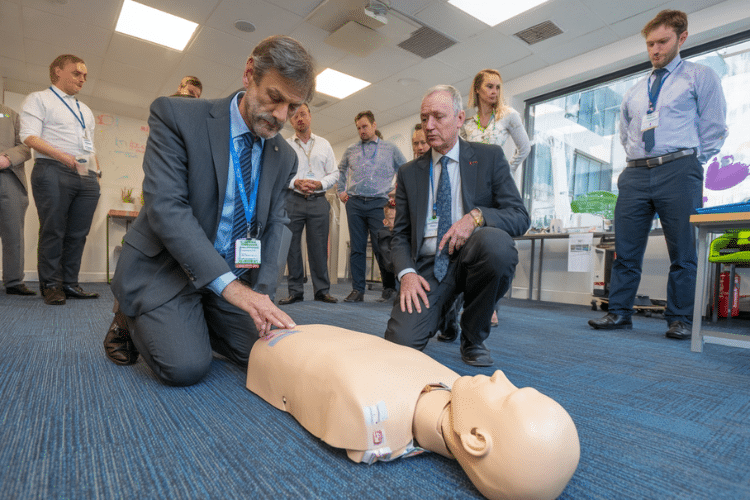
Table of Contents:
Why first aid matters in the workplace
What employers need to consider
First aid protects employees and others on site
Why the first few minutes can make a difference
How first aid training supports safer, more resilient workplaces
Which workplace first aid course might you need?
Why this matters for Dorset SMEs
First aid training in Dorset with Ouch
Why first aid matters in the workplace
The purpose of workplace first aid is simple: to provide immediate help to someone who is injured or suddenly unwell before professional medical help arrives.
Prompt first aid can:
- Preserve life during serious emergencies
- Help prevent an injury or illness from becoming worse
- Reduce pain, shock and further complications
- Provide reassurance to the person affected
- Help emergency services by keeping the casualty as stable as possible until they arrive
First aid training does not turn employees into medical professionals. It gives suitable people the knowledge and confidence to assess a situation, protect themselves and others, call for help and provide appropriate first aid until further support arrives.
Need help deciding which course your business requires? Our team can help you choose between Emergency First Aid at Work and First Aid at Work training.
What employers need to consider
Across Bournemouth, Poole, Christchurch, Wimborne and wider Dorset, employers must make adequate and appropriate first aid provision so employees can receive immediate attention if they are injured or become ill at work. What counts as adequate and appropriate depends on the workplace, the work being carried out and the risks involved.
A first aid needs assessment should guide the level of provision. This assessment may consider:
- The type of work being carried out
- Workplace hazards and the likelihood of harm
- The size of the workforce
- Shift patterns, holidays and other absences
- Previous accident history
- Travelling, remote or lone workers
- Distance from emergency medical services
- Shared or multi-occupancy sites
- Whether visitors, customers, contractors or members of the public may be present
HSE does not place a legal duty on employers to provide first aid for non-employees, such as members of the public. However, HSE strongly recommends including non-employees in the first aid needs assessment and making suitable provision for them.
This is why the same business may need different first aid arrangements at different sites, or may need to review provision as teams, working patterns or workplace risks change.
First aid protects employees and others on site
Many people think workplace first aid only applies to employees. In practice, emergencies can involve anyone on site.
A visitor may collapse in reception. A contractor may cut themselves while working on your premises. A customer may choke in a hospitality setting. A delivery driver may become unwell in a yard or warehouse.
Including these scenarios in your planning helps ensure people know who to contact, where the first aid kit is kept, who is trained, and how emergency services should be called and directed to the right location.

Why the first few minutes can make a difference
In many emergencies, quick action matters. First aiders are trained to recognise when something is serious, call 999 where needed and provide immediate support while waiting for professional help.
Examples include:
- Cardiac arrest: Early recognition, CPR and rapid access to an automated external defibrillator (AED) can make a significant difference. Resuscitation Council UK says that, in adults, defibrillation within 3-5 minutes of collapse may produce survival rates as high as 50-70%.
- Choking: Correct first aid techniques can help clear an airway obstruction before oxygen deprivation causes serious harm.
- Severe bleeding: Applying pressure and using appropriate dressings can help reduce life-threatening blood loss while emergency help is on the way.
- Burns and scalds: Cooling a burn correctly and quickly can help reduce further tissue damage and pain.
- Stroke: Recognising FAST signs – Face, Arms, Speech, Time to call 999 – can help people get urgent medical help sooner.
- Anaphylaxis: Recognising signs of a severe allergic reaction and calling for emergency help quickly can be vital.
The aim is not to diagnose or replace emergency services. The aim is to recognise danger, act safely and get the right help as quickly as possible.
How first aid training supports safer, more resilient workplaces
Workplace first aid is about more than responding to accidents. Good training can also support a stronger safety culture and a calmer response when something unexpected happens.
- More confident responders: Trained first aiders are more likely to know what to do, where equipment is kept and when to call emergency services.
- Clearer emergency procedures: Training helps teams understand their roles, communication routes and immediate actions during an incident.
- Better reassurance for staff: Employees often feel more supported when they know their employer has practical first aid arrangements in place.
- Less operational disruption: A calm, planned response can help avoid confusion and reduce the wider disruption that often follows an incident.
- More useful review after incidents: Clear first aid arrangements make it easier to record what happened, review procedures and update training or equipment where needed.
Which workplace first aid course might you need?
The right course depends on your first aid needs assessment, workplace risks, team size and the type of injuries or illnesses that could reasonably occur. These Ouch courses are common options for workplace first aid provision:
Emergency First Aid at Work (EFAW)
- Emergency First Aid at Work is designed for lower-risk workplaces, such as offices, shops or smaller organisations, and people identified as suitable to act as emergency first aiders.
- Ouch describes EFAW as a one-day course covering essential workplace first aid skills, including CPR, AED use, choking, bleeding, shock, burns and minor injuries.
- Ouch lists the EFAW certificate as valid for three years.
First Aid at Work (FAW)
- First Aid at Work is designed for workplaces that need a more comprehensive level of first aid cover, including higher-risk environments or businesses where the needs assessment identifies broader first aid requirements.
- Ouch’s FAW course covers a wider range of injuries and illnesses, including CPR, AED use, eye injuries, poisoning, anaphylaxis, heart attack, stroke, asthma and diabetic emergencies.
- Ouch offers face-to-face and blended learning options, which can help employers plan training around operational pressures.
First Aid at Work Requalification
- First Aid at Work Requalification is designed for staff who are already qualified First Aid at Work first aiders and need to renew before their qualification expires.
- Ouch’s requalification course refreshes the knowledge and practical skills required to requalify for a further three years.
- Employers should plan ahead to avoid gaps in first aid cover.
If you are unsure which route is suitable, start with your needs assessment and speak to Ouch for practical guidance. A course can help support compliance, but employers should still keep first aid arrangements under review.

Why this matters for Dorset SMEs
For busy SMEs, training is rarely just a diary entry. Releasing staff can affect rotas, customer service, site productivity and project schedules.
That is why first aid training needs to be easy to plan. Local course access, predictable dates, clear booking information and in-house options can all reduce the disruption of keeping teams trained.
For businesses in Bournemouth, Poole, Christchurch, Wimborne and the wider Dorset area, choosing a local provider can also reduce travel time and help staff get back to work more easily.
First aid training in Dorset with Ouch
Ouch Learning & Development helps Dorset organisations stay prepared with practical workplace first aid training built around the realities of busy teams.
Courses include Emergency First Aid at Work, First Aid at Work and First Aid at Work Requalification, with open course and in-house options available. Ouch’s approach is designed to make training easier to organise, reduce time away from work where possible and support businesses that need to stay compliant without disrupting day-to-day operations.
Whether you are training your first workplace first aider, reviewing your first aid needs assessment or renewing existing qualifications, Ouch can help you choose a sensible training route and plan dates around your team.
Next step
Review your first aid needs assessment, check the expiry dates of current first aid certificates and identify any gaps in cover. To make training easier to plan, speak to Ouch about Emergency First Aid at Work, First Aid at Work or First Aid at Work Requalification in Dorset.
Frequently asked questions
Why is first aid important at work?
First aid is important because it allows immediate help to be given after an accident or sudden illness. This can help preserve life, prevent the situation from becoming worse, reassure the casualty and support emergency services before they arrive.
Is workplace first aid a legal requirement?
Employers must make adequate and appropriate first aid provision for employees if they are injured or become ill at work. The exact provision should be based on a first aid needs assessment. This article is general guidance and should not be treated as legal advice.
Does every business need trained first aiders?
Not always in the same way. HSE says there are no hard and fast rules on how many trained first aiders a workplace should have. It depends on the nature of the work, the workplace location and the findings of the first aid needs assessment.
Who benefits from workplace first aid?
Employees benefit directly, but visitors, customers, contractors, delivery drivers and members of the public may also benefit from prompt first aid if they are on site during an emergency.
What is the difference between Emergency First Aid at Work and First Aid at Work?
Emergency First Aid at Work is generally suited to lower-risk workplaces and covers essential emergency first aid skills. First Aid at Work is more comprehensive and may be suitable where workplace risks or the needs assessment show a higher level of first aid cover is needed.
How long do workplace first aid certificates last?
Ouch’s Emergency First Aid at Work, First Aid at Work and First Aid at Work Requalification certificates are listed as valid for three years. Employers should plan renewals before certificates expire to avoid gaps in cover.
How can Ouch help reduce disruption?
Ouch offers local Dorset training, clear course information, open course options and in-house delivery where suitable. This helps employers plan training around rotas, workloads and operational pressures.