

If you are thinking about booking a First Aid at Work course, it is natural to want to know what the training actually covers before you commit time away from the workplace.
For employers, training has to be useful, practical and easy to plan. For learners, it needs to build enough confidence to respond calmly if someone is injured or becomes unwell at work.
A First Aid at Work course, often shortened to FAW, is designed to give workplace first aiders the knowledge and practical skills to respond to a wide range of workplace injuries and medical emergencies until professional help arrives.
In this guide, we explain what is usually covered on a First Aid at Work course, how it differs from Emergency First Aid at Work, what learners can expect from the practical elements, and how Dorset employers can plan training with less disruption to the working day.
Table of Contents
What Is a First Aid at Work Course?
Who Is a First Aid at Work Course Suitable For?
What Topics Are Covered on a First Aid at Work Course?
Managing an Unconscious Casualty
Treating Common Workplace Injuries
Responding to Medical Emergencies
Is a First Aid at Work Course Practical?
How Long Does a First Aid at Work Course Take?
How Long Does the Qualification Last?
First Aid at Work vs Emergency First Aid at Work
How to Plan First Aid at Work Training with Less Disruption
About Ouch Learning & Development

What Is a First Aid at Work Course?
First Aid at Work is a comprehensive workplace first aid qualification. It is usually chosen where an employer’s first aid needs assessment shows that a more detailed level of training is appropriate.
The course includes the Emergency First Aid at Work syllabus and also covers a wider range of specific injuries and illnesses. This makes it suitable for many higher-risk workplaces, larger teams or organisations where first aiders may need to respond to more varied incidents.
The aim is not only to help learners remember information. A good FAW course should help them practise what to do, understand priorities during an incident and feel more prepared to act in a real emergency.
Who Is a First Aid at Work Course Suitable For?
A First Aid at Work course may be suitable for employees who have been identified as workplace first aiders through the employer’s first aid needs assessment.
It is commonly considered for workplaces such as:
- Construction sites
- Warehouses
- Manufacturing and engineering environments
- Facilities and maintenance teams
- Hospitality businesses with higher-risk activities
- Education settings
- Larger offices or multi-site teams
- Organisations where staff work shifts, use equipment or carry out physical work
Employers should not assume that every workplace needs the same level of training. The right course depends on the type of work, the hazards present, staff numbers, shifts, location and how quickly emergency help can arrive.
What Topics Are Covered on a First Aid at Work Course?
Course content can vary slightly between providers, but a First Aid at Work course should cover the core responsibilities of a workplace first aider and a broad range of practical emergency situations.
Typical First Aid at Work course content includes:
| Topic | What learners practise or understand |
| The role and responsibilities of a first aider | Understanding what a first aider should do, how to act safely and when to seek further help. |
| Assessing an incident | Checking the scene, identifying hazards, protecting yourself and others, and deciding what to do first. |
| Primary and secondary surveys | Assessing responsiveness, breathing, circulation, injuries and symptoms in a structured way. |
| Unresponsive casualties | Managing someone who is unconscious, including monitoring breathing and using the recovery position where appropriate. |
| CPR | Recognising cardiac arrest and practising effective cardiopulmonary resuscitation. |
| AED use | Learning how to use an automated external defibrillator safely and confidently. |
| Choking | Recognising and responding to mild and severe choking. |
| Bleeding and shock | Managing external bleeding, severe wounds and signs of shock. |
| Burns and scalds | Providing immediate first aid for burns and understanding when urgent help is needed. |
| Minor injuries | Managing small cuts, bruises, splinters, bites and stings. |
| Bone, muscle and joint injuries | Responding to suspected fractures, sprains, strains and dislocations. |
| Head, spinal and chest injuries | Recognising potentially serious injuries and keeping the casualty still and supported. |
| Eye injuries | Responding appropriately to workplace eye injuries and contamination. |
| Poisoning | Recognising possible poisoning and seeking suitable emergency help. |
| Anaphylaxis | Responding to severe allergic reactions within the limits of first aid training and workplace procedures. |
| Major illnesses | Recognising and responding to heart attack, stroke, asthma, epilepsy and diabetic emergencies. |
| Incident recording and handover | Sharing clear information with emergency services and following workplace reporting procedures. |

Learning CPR and Using an AED
CPR and AED use are two of the most important practical skills covered on a First Aid at Work course.
Learners usually practise how to recognise when someone is not breathing normally, call for emergency help, give chest compressions, provide rescue breaths where appropriate and use an automated external defibrillator.
The practical element matters because these are skills people are unlikely to use every day. Repetition during training helps learners feel more confident if they ever need to respond for real.
Managing an Unconscious Casualty
The course also covers how to help someone who is unresponsive.
Learners are shown how to check for danger, assess responsiveness, check breathing and place a casualty in the recovery position when appropriate. They also learn to monitor the casualty and recognise when the situation changes.
This section is especially important because unconscious casualties can deteriorate quickly and may need urgent medical support.
Treating Common Workplace Injuries
Many workplace incidents involve injuries that need prompt, calm action. A FAW course helps learners understand how to respond to both minor and more serious injuries.
This can include cuts, severe bleeding, burns, scalds, fractures, sprains, strains, eye injuries, head injuries and suspected spinal injuries.
The goal is to reduce further harm, keep the casualty as safe and comfortable as possible, and get the right help quickly.
Responding to Medical Emergencies
A First Aid at Work course does not only cover accidents. It also helps learners recognise common medical emergencies that could happen at work.
This may include heart attacks, strokes, asthma attacks, diabetic emergencies, seizures and severe allergic reactions.
Learners are taught what signs to look for, what first aid action may be appropriate and when to call the emergency services.
Is a First Aid at Work Course Practical?
Yes. First aid training should be practical as well as theoretical.
Learners can expect hands-on exercises, trainer demonstrations and realistic scenarios. These activities help people apply what they have learned instead of simply listening to information.
Practical training can also help reduce hesitation. In an emergency, confidence and clear decision-making are just as important as remembering the correct steps.
How Is the Course Assessed?
Assessment usually includes practical assessment and a knowledge check, such as a multiple-choice test. This confirms that learners can demonstrate key skills and understand the responsibilities of a workplace first aider.
With Ouch Learning & Development, the First Aid at Work course includes practical assessment and a multiple-choice exam. Employers should check the live course page before publishing or booking, as assessment details and delivery formats can change.
How Long Does a First Aid at Work Course Take?
A standard First Aid at Work course is commonly delivered over three days. Ouch’s course information also lists a blended option, combining online learning with face-to-face training.
For busy teams, the format can make a big difference. Booking early, staggering delegates across different dates or using blended learning where suitable may help reduce disruption to normal operations.
How Long Does the Qualification Last?
First Aid at Work certificates are valid for three years.
Before a certificate expires, first aiders should complete the appropriate requalification route to maintain their workplace first aider status. HSE also strongly recommends annual refresher training to help first aiders keep their basic skills up to date.
For employers, keeping a training record with certificate dates and planned renewal dates can help avoid gaps in first aid cover.
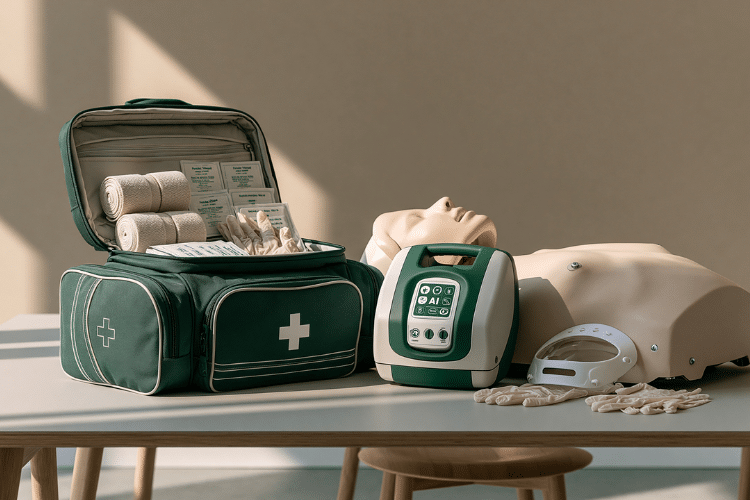
First Aid at Work vs Emergency First Aid at Work
The difference between First Aid at Work and Emergency First Aid at Work is mainly the depth and scope of training.
| Course | Typical use |
| Emergency First Aid at Work | Usually a shorter course focused on emergency first aid for someone who is injured or becomes ill at work. It is often suitable for lower-risk workplaces where the first aid needs assessment supports this level of cover. |
| First Aid at Work | A more comprehensive course that includes the EFAW syllabus and also covers a wider range of specific injuries and illnesses. It is often suitable for higher-risk workplaces or more complex first aid needs. |
How to Plan First Aid at Work Training with Less Disruption
For many Dorset employers, the biggest challenge is not recognising the need for training. It is releasing staff without leaving the rota short.
To make First Aid at Work training easier to plan, consider:
- Reviewing certificate expiry dates several months ahead.
- Staggering first aiders across different course dates where possible.
- Using blended learning where appropriate to reduce time away from site.
- Training more than one person so cover does not rely on a single employee.
- Choosing a local provider to reduce travel time and downtime.
- Keeping a simple training matrix with issue dates, expiry dates and renewal reminders.
This is where Ouch’s low-disruption approach is designed to help. Clear course information, local delivery, predictable dates and practical booking support make it easier for busy teams to stay prepared without unnecessary disruption.
About Ouch Learning & Development
Ouch Learning & Development provides practical, accredited safety training for busy teams across Dorset, Bournemouth, Poole, Wimborne and beyond.
Our First Aid at Work course is designed for employees who need to act as workplace first aiders, with practical training that helps learners respond confidently to real workplace incidents.
We also offer Emergency First Aid at Work and First Aid at Work Requalification, helping employers choose a suitable level of training based on their first aid needs assessment.
If you are not sure which course your team needs, speak to Ouch for guidance. We can help you compare options and plan training in a way that reduces disruption to your working day.
| Need to book First Aid at Work training? Speak to Ouch Learning & Development to find a suitable First Aid at Work course date, discuss in-house options or plan requalification training before certificates expire. |
FAQs
What is covered on a First Aid at Work course?
A First Aid at Work course usually covers the role of a first aider, incident assessment, CPR, AED use, unconscious casualties, choking, bleeding, shock, burns, fractures, eye injuries, poisoning, anaphylaxis and major illnesses such as heart attack, stroke, asthma, epilepsy and diabetic emergencies.
Is First Aid at Work more detailed than Emergency First Aid at Work?
Yes. HSE describes First Aid at Work training as including the Emergency First Aid at Work syllabus as well as training on a range of specific injuries and illnesses.
Is the course practical?
Yes. A First Aid at Work course includes practical exercises so learners can practise key skills such as CPR, AED use, recovery position and managing workplace injury scenarios.
How long does a First Aid at Work course take?
A standard First Aid at Work course is commonly delivered over three days. Ouch also lists a blended learning option combining e-learning with face-to-face training. Check the live course page before publishing or booking.
How long does a First Aid at Work certificate last?
First Aid at Work certificates last for three years. Before the certificate expires, the first aider should complete the appropriate requalification route to remain competent to act as a workplace first aider.
Is annual refresher training mandatory?
No. HSE says annual refresher training is not mandatory, but it is strongly recommended to help trained first aiders maintain basic skills and keep up to date with first aid procedures.
Who should attend a First Aid at Work course?
The course is suitable for employees identified through a workplace first aid needs assessment as needing comprehensive workplace first aid training. It is often relevant for higher-risk workplaces, larger teams or organisations with more complex first aid needs.
Will learners be assessed?
Yes. Assessment commonly includes practical assessment and a knowledge check. Ouch’s current course information lists a multiple-choice exam and practical assessment for First Aid at Work.