

A workplace fire marshal helps reduce fire risk and supports people during an emergency. Their role is practical: spotting hazards, checking escape routes, supporting fire drills, helping people evacuate safely and reporting fire safety concerns.
A fire marshal does not replace the employer’s wider fire safety responsibilities. In most workplaces, the employer, owner, landlord, occupier or another person with control of the premises is known as the “responsible person”. Their duties include carrying out and reviewing a fire risk assessment, putting suitable fire safety measures in place, planning for emergencies and providing fire safety information, instruction and training.
For busy Dorset workplaces, trained fire marshals can help make fire safety easier to manage day to day. They give nominated staff a clearer role, help reinforce procedures and support calm, organised action if the alarm sounds.
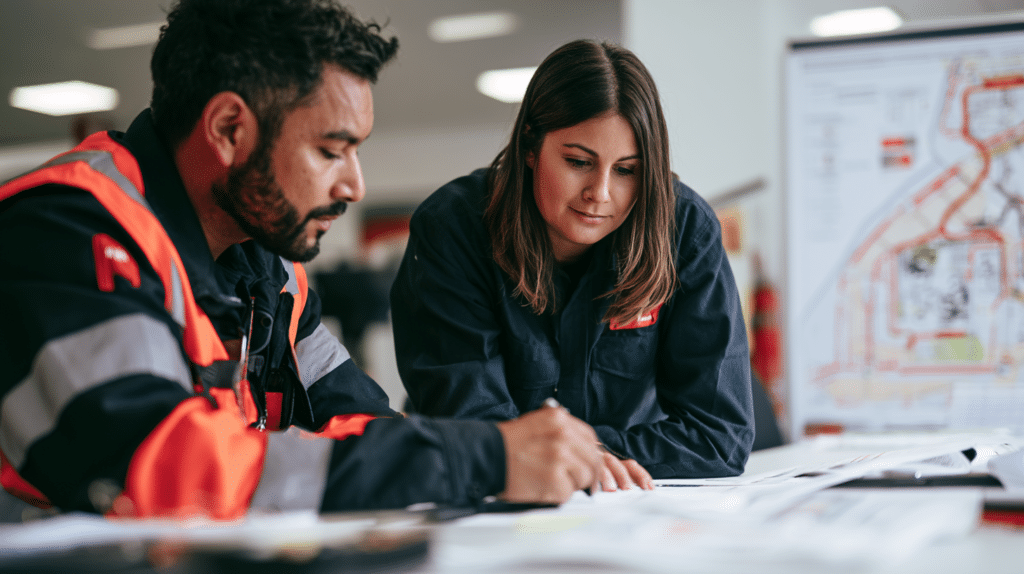
What is a fire marshal?
A fire marshal is a nominated member of staff with additional fire safety responsibilities. In some workplaces, this role may also be called a fire warden.
The exact role depends on the workplace. A small office may only need simple routine checks and evacuation support. A larger site, workshop, warehouse, school, care setting or hospitality venue may need fire marshals across different areas, departments or shifts.
The purpose of the role is to help fire safety procedures work in practice, not just exist on paper.
Fire marshal duties: what does a fire marshal do?
Fire marshal duties usually cover two areas: prevention and emergency response.
Prevention means helping reduce the chance of a fire starting. Emergency response means helping people follow the evacuation plan safely if a fire alarm sounds or a fire occurs.
Common fire marshal responsibilities include:
- Identifying possible fire hazards
- Checking escape routes are clear
- Reporting blocked exits, damaged equipment or poor housekeeping
- Helping staff understand evacuation procedures
- Supporting fire drills
- Assisting visitors or contractors during evacuations
- Helping account for people at the assembly point
- Reporting concerns to the fire safety manager or responsible person
- Keeping or supporting inspection records where required
Ouch’s Fire Marshal course covers practical workplace topics including legislation, causes of fire and ignition sources, fire prevention measures, extinguisher use and maintenance, emergency procedures, arson awareness, inspection records, hot works, fire hazard identification and risk control.
Day-to-day fire marshal responsibilities
Many fire marshal responsibilities are simple routine checks. These checks help identify issues before they become more serious.
A fire marshal may look out for:
- Blocked corridors, exits or escape routes
- Fire doors being wedged open
- Damaged or missing fire safety signs
- Poor storage of flammable materials
- Overloaded sockets or unsafe electrical equipment
- Waste build-up
- Problems with extinguishers or alarm points
- Unsafe hot works or contractor activity
GOV.UK guidance says regular checks should make sure fire alarm systems are working, emergency lighting is working, faults are recorded, escape routes are clear, fire escapes can be opened easily, automatic fire doors close correctly and fire exit signs are in the right place.
Fire marshals are not expected to fix every issue themselves. Their role is to notice problems, act within their training and report concerns promptly.

Helping identify fire hazards
Fire hazards vary depending on the workplace. In offices, common risks may include electrical equipment, heaters, kitchens and blocked escape routes. In workshops, warehouses or construction environments, risks may include machinery, flammable substances, hot works, changing site layouts and temporary storage.
A fire risk assessment should identify fire hazards, identify people at risk, evaluate and reduce those risks, record findings, prepare an emergency plan, provide training and be reviewed regularly.
Fire marshals can support this process by feeding back what they see during normal work. This is particularly helpful in workplaces where layouts, stock levels, contractors or work activities change regularly.
Supporting fire drills
Fire drills help test whether people understand what to do and whether the evacuation plan works in real conditions.
During a drill, a fire marshal may help:
- Encourage people to leave promptly
- Direct people to the right exit
- Check their assigned area if it is safe to do so
- Guide visitors or contractors
- Report issues at the assembly point
- Identify improvements after the drill
GOV.UK guidance says businesses should carry out at least one fire drill per year and record the results as part of the fire safety and evacuation plan.
A good drill is not just a tick-box exercise. It helps reveal practical issues, such as confusion over routes, unclear assembly points, locked exits or staff not knowing who to report to.
Helping coordinate safe evacuations
If the alarm sounds, fire marshals help put the evacuation plan into action.
This may include directing people towards exits, encouraging a calm evacuation, helping visitors understand where to go and reporting relevant information once outside.
Fire marshals should not put themselves at unnecessary risk. Their role is to support safe evacuation, not to act as firefighters.
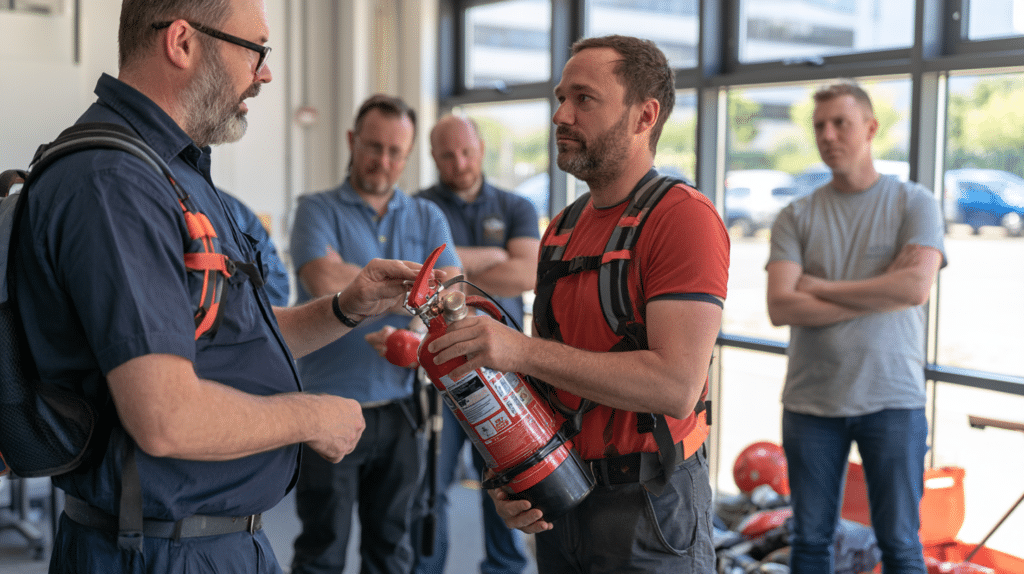
Do fire marshals use fire extinguishers?
Fire marshals are often trained in the types and uses of fire extinguishers, but this does not mean they should always tackle a fire.
In many situations, the safest action is to raise the alarm, leave the building and call the fire and rescue service. Extinguisher use should only be considered where the person has been trained, the fire is small, the correct extinguisher is available, there is a clear escape route and it is safe to act.
Ouch’s Fire Marshal course includes fire extinguisher use and maintenance as part of the course content, and the course page also lists practical training using fire extinguishers as included.
What is a fire marshal responsible for?
A fire marshal is usually responsible for helping their workplace follow its fire safety arrangements.
This may mean taking responsibility for a particular floor, department, shift, work area or group of people during an evacuation. Their responsibilities should be clearly explained during training and linked to the workplace’s fire risk assessment and emergency plan.
The responsible person remains responsible for making sure suitable fire safety arrangements are in place. Fire marshals help those arrangements work in everyday practice.
How many fire marshals does a workplace need?
There is no single number that suits every workplace. The right number depends on the size, layout, work activities, fire risks, staffing levels, shift patterns and whether anyone may need help to evacuate.
A small, low-risk office may need fewer fire marshals than a larger site with multiple floors, workshops, public access, contractors or shift work.
For a fuller guide, read Ouch’s dedicated article: How Many Fire Marshals Should There be in Your Workplace?
When should Fire Marshal training be considered?
Fire Marshal training should be considered when someone is appointed to take on fire marshal duties, when existing fire marshals need a refresher or when the workplace has changed.
It may be especially useful when:
- You are appointing new fire marshals
- Your fire risk assessment identifies a need for nominated staff
- Evacuation procedures have changed
- Your layout, equipment or work activities have changed
- Staff are unsure what to do during drills
- You need cover across departments, shifts or sites
If you’re appointing new fire marshals, view Ouch’s Fire Marshal training course for current course content, delivery options and upcoming dates.
Ouch’s Fire Marshal course is suitable for employees who will be taking on the role of fire marshal in their workplace. Before publication, confirm any certification, assessment, award-validity, learner-ratio and delivery-mode details against the live course page.
What our customers say
We want our training to be practical, engaging and useful in the workplace. But you don’t have to take our word for it.
Megan from Coles Miller Solicitors LLP
Hear what Megan from Coles Miller Solicitors LLP thought about her experience of Fire Marshal training with Ouch.
Peter from Pivotal House Group Limited
Peter from Pivotal House Group Limited shares his experience of completing Fire Marshal training with Ouch.
Book Fire Marshal training in Wimborne
If you need to appoint or refresh workplace fire marshals, Ouch runs Fire Marshal training at its Wimborne training centre in Dorset.
For SMEs in Wimborne, Poole, Bournemouth and surrounding Dorset areas, the Wimborne venue provides a local option for training staff without travelling further afield. Ouch also offers in-house and on-site Fire Marshal training for larger groups, helping businesses plan training around operational demands.
Check the live Fire Marshal course page for current Wimborne dates, times, places and prices before booking.
Need to train your workplace fire marshals? Book an upcoming Fire Marshal course in Wimborne, or ask Ouch about in-house training for your team to make scheduling around operational demands easier.
Summary
A fire marshal helps support workplace fire safety by identifying hazards, carrying out routine checks, supporting drills and helping people evacuate safely.
Their role should be practical, clearly defined and matched to the risks of the workplace. With suitable training, fire marshals can help businesses keep fire safety procedures understood, visible and easier to manage.
Frequently asked questions
What are the main fire marshal duties?
The main fire marshal duties include checking escape routes, spotting hazards, reporting concerns, supporting fire drills and helping people evacuate safely during an emergency.
What is a fire marshal responsible for at work?
A fire marshal is responsible for supporting the workplace’s fire safety arrangements. This may include routine checks, evacuation support, reporting issues and helping staff follow emergency procedures.
Is a fire marshal the same as a fire warden?
In many UK workplaces, the terms fire marshal and fire warden are used in a similar way. What matters most is that the person understands their specific role, duties and evacuation procedures.
Does every workplace need a fire marshal?
Workplaces should assess their fire safety arrangements and decide what level of support is appropriate. The number of fire marshals needed will depend on the premises, people, risks and working patterns.
Can a fire marshal fight a fire?
A fire marshal should not put themselves at risk. They may be trained in extinguisher use, but in many situations the safest action is to raise the alarm, evacuate and call the fire and rescue service.
Where can I book Fire Marshal training in Dorset?
Ouch Learning & Development runs Fire Marshal training at its Wimborne training centre in Dorset, with open-course and in-house options available. Check the live Fire Marshal course page for current dates and availability.